
Last updated 2026-06-09 by Roar Safaris.
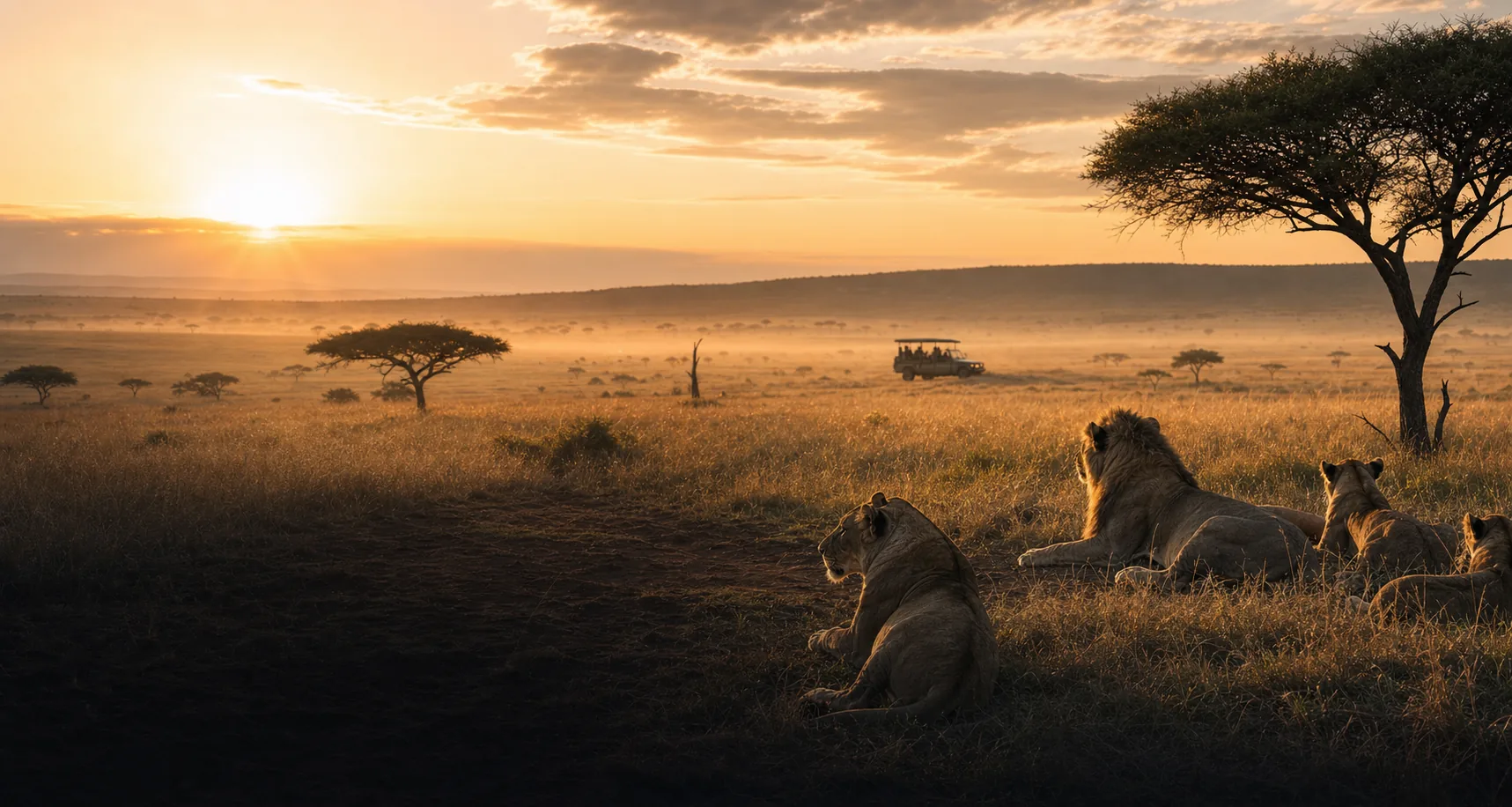
The Masai Mara is Kenya’s most famous safari destination and one of the greatest wildlife areas in Africa. It is the place many travellers imagine when they dream of safari: golden plains, acacia trees, lions in the grass, cheetahs scanning the horizon, elephants moving through open land, and sunsets that feel almost unreal.
The Mara is especially famous for the Great Migration, when large herds of wildebeest and zebra move through the greater Serengeti-Mara ecosystem. The Kenya side is most popular between July and October, although wildlife movement depends on rain, grass, and natural patterns.
But the Masai Mara is not only about migration. It offers excellent wildlife viewing throughout the year. Lions, cheetahs, elephants, buffalo, giraffes, hyenas, hippos, crocodiles, and many antelope species can be seen across the reserve and surrounding conservancies.
A key decision when planning a Mara safari is whether to stay in the main reserve or in a private conservancy. The main reserve gives you access to iconic landscapes and migration routes. Private conservancies offer a more exclusive atmosphere, fewer vehicles, and activities that may include night drives, guided walks, and off-road viewing where permitted.
For first-time travellers, 3 nights in the Mara is ideal. Two nights can work, but it often feels too short because transfers take time and wildlife viewing improves with patience. Luxury travellers may prefer a fly-in safari to reduce road travel and maximize time in the bush.
The best time to visit the Masai Mara is June to October for dry-season game viewing and migration possibilities. January to March is also excellent, with strong wildlife sightings and fewer crowds than peak migration months. April and May are quieter and greener, but rains can affect access and some camps may close.
A Masai Mara safari can be budget, mid-range, luxury, or ultra-luxury. Costs depend on accommodation, season, transport, park fees, conservancy fees, and whether you choose private or shared game drives.
The Mara is best for travellers who want the classic Kenya safari: big cats, open plains, dramatic wildlife scenes, Maasai culture, and unforgettable landscapes. It is also one of the best safari destinations for honeymooners, photographers, families, and first-time visitors.
A well-planned Masai Mara safari is not just a wildlife trip. It is one of Kenya’s signature journeys.
Use this guide as a starting point, then speak to Roar Safaris for current availability, realistic routing, lodge options, and pricing for your dates.
Related Guides and Experiences
Continue planning with these connected Roar Safaris resources.