
Last updated 2026-06-09 by Roar Safaris.
Packing for a Kenya safari is about comfort, practicality, and preparation. You do not need to overpack, but you do need the right items.
The first rule is to pack light. If your safari includes domestic flights, soft-sided luggage is usually better than hard suitcases because small aircraft may have luggage restrictions. Even on road safaris, soft bags are easier to load into safari vehicles.
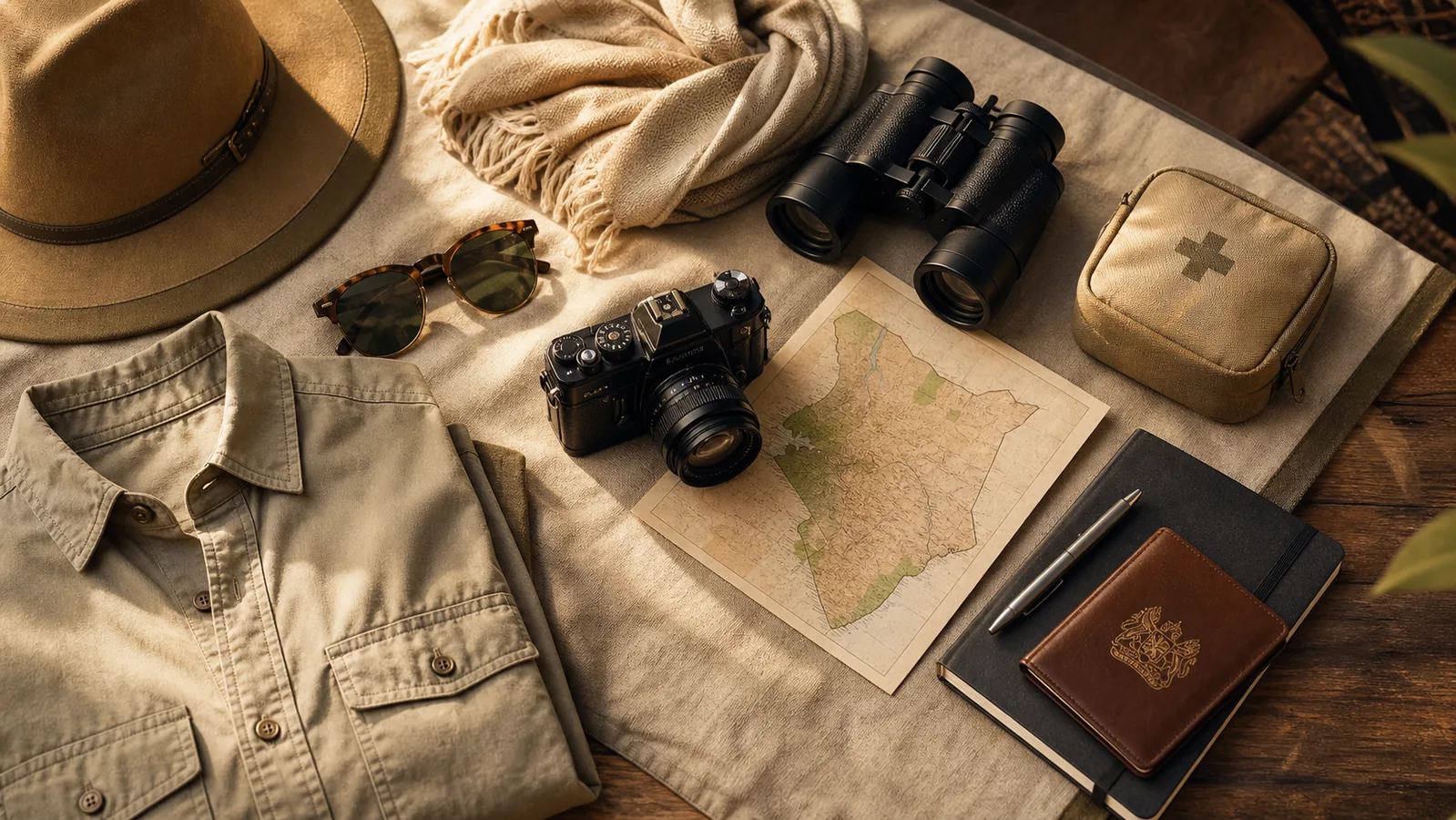
For clothing, choose neutral colours such as khaki, beige, olive, brown, grey, and cream. Avoid very bright colours on game drives. Pack lightweight shirts, comfortable trousers, shorts for warm afternoons, a fleece or jacket for early mornings, and a light rain jacket if travelling in rainy months.
Safari mornings can be cold, especially in highland areas or during dry season. Afternoons can become hot. Layers are the secret.
Comfortable closed shoes are enough for most game drives. If your itinerary includes walking safaris, bring better walking shoes. Sandals can be useful around camp.
Essential items include sunglasses, sunscreen, a wide-brim hat, insect repellent, lip balm, personal medication, hand sanitizer, and basic toiletries. A small first-aid kit is useful, especially for headaches, stomach discomfort, allergies, or minor cuts.
Bring binoculars. They can completely change your safari experience. Wildlife is not always next to the vehicle, and binoculars help you enjoy distant sightings, birds, and landscapes.
For photography, bring your camera, extra batteries, memory cards, chargers, and lens cleaning cloth. Dust is part of safari life, so protect your equipment.
Important documents include your passport, travel insurance, eTA approval, flight details, accommodation confirmations, emergency contacts, and copies of key documents. Keep digital and printed copies where possible.
A power bank is useful for long drives. Many camps have charging points, but not always inside rooms, depending on the property.
For the coast, pack swimwear, light resort clothing, sandals, and sun protection. If visiting cultural or religious sites, carry modest clothing.
Do not pack too many formal outfits. Safari luxury is relaxed. Even premium camps usually favour natural elegance over heavy dressing.
The best safari packing approach is simple: light bags, neutral layers, essential documents, sun protection, insect protection, binoculars, and a sense of readiness.
Pack well, then let Kenya do the rest.
Use this guide as a starting point, then speak to Roar Safaris for current availability, realistic routing, lodge options, and pricing for your dates.
Related Guides and Experiences
Continue planning with these connected Roar Safaris resources.